Navy hustling to modernize hundreds of legacy IT systems via Cattle Drive
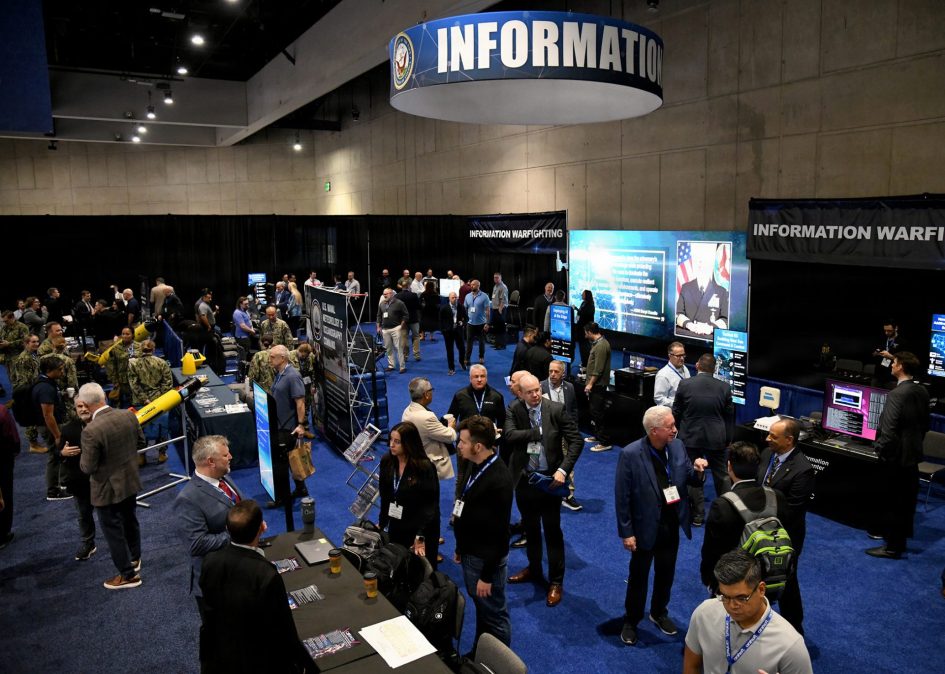
SAN DIEGO — Five years into Operation Cattle Drive, the Navy has shut down more than two dozen outdated IT systems and pinpointed hundreds more that must be revamped, merged or decommissioned in the near future, according to the service’s acting Chief Information Officer Barry Tanner.
“This has been the year of actually landing on enterprise services and making that real,” he said Tuesday at the WEST 2026 conference. “And in the coming days, we’ll be seeing some specific direction from the [Undersecretary of the Navy Hung Cao] mandating the use of enterprise services across the department — and executing Cattle Drive, which again, we’ve been talking about for a while — but at scale and at speed.”
Cattle Drive is designed to “round up” — and update or eliminate — obsolete, redundant, and vulnerable IT assets and then reinvest funds and focus into the sea service’s higher-priority platforms and pursuits.
Navy officials have supplied a few updates on the initiative’s modernization progress since it was first unveiled in late 2020. The effort had reportedly freed up about $150 million as of 2022.
“In the last 6 to 8 months, we have identified over 200 systems that are either duplicative of enterprise services that exist already today, or are legacy in nature and need to be modernized and consolidated with others,” Tanner said. “We’ve already turned 25 of those off.”
After an initial sprint in August, the Navy designated seven “Enterprise Services” that were duplicative of many out-of-date systems uncovered. Some of those buckets include identity management environments and collaboration platforms like Flank Speed. The sea service also recently designated GenAI.mil as its generative artificial intelligence enterprise service.
Over the next six to 12 months, Tanner said, the Navy will be absorbing a lot of its legacy capabilities into those enterprise hubs.
Prior to his civilian career leading several high-stakes IT and cyber pursuits, Tanner served in uniform and attained the rank of Navy captain. He held multiple unit command and major staff director positions over a 31-year career in the active and reserve components.
“The last piece of this, that I think [is more or the most] important, is we’re incorporating this into our annual fiscal reviews. So, as everybody here knows, it’s really hard to turn something off. We’re just really not good at turning things off — and part of that is we never really connected some of these initiatives into the true budgeting process,” the CIO said. “And we’re fixing them.”
Now, the plan is that “every year we will be reviewing … all the things we cattle drove,” Tanner noted. Officials will detail how they were resourced and where associated funding streams will shift or stop.
“We did that first iteration this year, and we’re going to be doing it every summer review. Going forward, it will be part of the normal budgeting process,” he confirmed.
Separately, during a meeting with a small group of reporters on the sidelines of the summit Wednesday, Vice Adm. Mike Vernazza, Naval Information Forces commander, said the command he leads continues to maintain multiple older systems. However, officials are now working directly with the CIO’s team “to make sure that all the fleet equities and some of these legacy systems are still being addressed,” and that there’s no gap in service and new options that replace them come online, or are further integrated.
“We’re participating in [Tanner’s] working groups, and I would say, bridging the gap between the fleets and [Department of the Navy’s] CIO and acting as, I think, an honest broker [and] interlocutor with the fleets on some of these legacy systems that are going to be going away, while ensuring that capability and capacity that these legacy systems provided is also not going away,” Vernazza told DefenseScoop.